China Top Backup Camera With Monitor Suppliers?
Finding reliable China Top Backup Camera With Monitor Suppliers requires more than comparing catalog prices. A dependable supplier should understand vehicle layouts, installation limits, and daily driving conditions. This guide examines manufacturers offering Backup Camera With Monitor solutions for trucks, buses, vans, trailers, and passenger vehicles. It considers camera clarity, monitor size, night vision, viewing angle, waterproof construction, and signal stability.
Small details matter.
A practical evaluation should include sample testing, not only website claims. Check whether the image remains clear under direct sunlight, rain, dust, and low temperatures. Confirm the monitor’s power range, cable length, connector type, and mounting method before placing a bulk order. Suppliers with documented quality controls, responsive engineering teams, and consistent production records deserve closer attention. Verified certifications and traceable inspection reports also strengthen buyer confidence, although paperwork alone cannot prove field performance. A polished catalog may still hide weak wiring or delayed after-sales support. That is worth remembering. Supplier selection should also consider customization, packaging protection, replacement policies, and communication speed. These factors can affect installation costs long after the purchase order is signed. We will compare supplier capabilities carefully while recognizing that no factory is perfect. Product performance may vary between batches, and vehicle compatibility can be overlooked. Buyers should request current samples and written specifications. Clear evidence supports better decisions.
China Backup Camera Suppliers: 12V/24V Systems, IP69K Protection, and 1080p
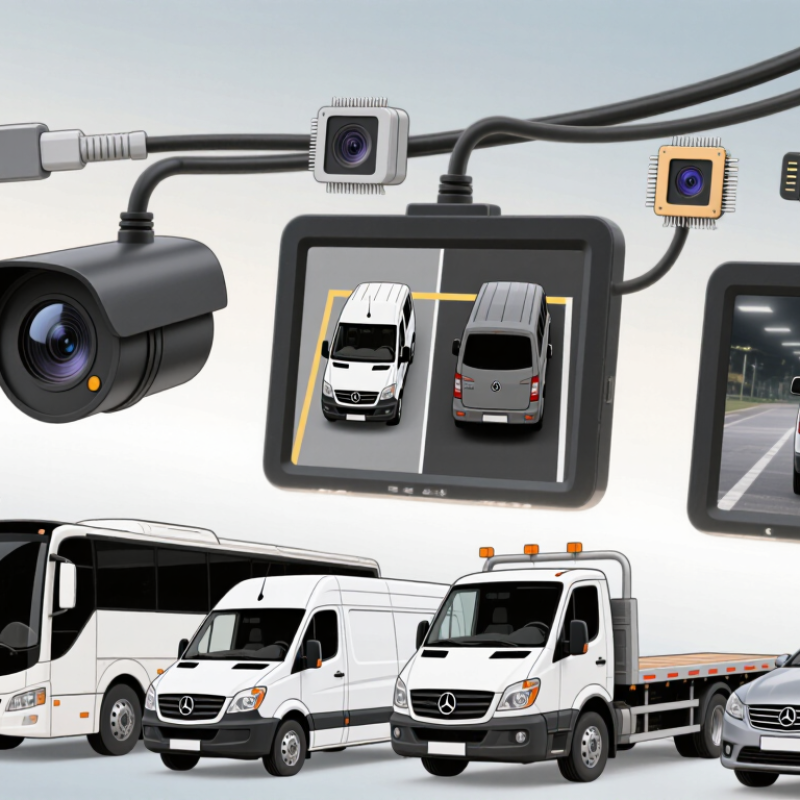
China backup camera suppliers now serve both 12V and 24V vehicle platforms. This matters for passenger cars, vans, buses, and heavy trucks. A stable camera should accept voltage variation without restarting the monitor. NHTSA requires rear visibility across a 10-foot by 20-foot zone for covered vehicles. That requirement shows why camera angle and mounting height matter, not only resolution.
1080p images can reveal a child-sized obstacle, a loose pallet, or a narrow loading bay more clearly. However, poor night performance can weaken that advantage. Look for infrared support, low-light testing, and a monitor with strong contrast. IP69K protection is also valuable for trucks exposed to pressure washing, dust, and road spray. ISO 20653 testing provides a more useful reference than vague “waterproof” wording. Some supplier claims remain unclear.
Tips: Ask for test reports, wiring diagrams, and sample footage before ordering. Confirm whether the system supports 12V, 24V, or both. Check the camera’s actual viewing angle. A very wide lens may create blind-zone distortion near the vehicle. Also test cable length on the real chassis. Long wiring can introduce interference, especially in crowded electrical systems. MarketsandMarkets’ 2024 automotive camera research identifies safety systems and commercial vehicles as important growth areas, but market forecasts are not product guarantees. Practical validation still matters.
China Backup Camera Systems: Resolution Comparison
A technical comparison of common backup-camera image formats. Full HD 1080p provides 1,920 × 1,080 pixels, while 720p provides 1,280 × 720 pixels. Commercial vehicle systems commonly support 12V or 24V electrical platforms, and IP69K protection is designed for high-pressure, high-temperature washdown environments.
12V Systems
Common in passenger vehicles and light-duty applications.
24V Systems
Common in trucks, buses, trailers, and heavy-duty vehicles.
IP69K Protection
Suitable for equipment exposed to intensive water jets and cleaning conditions.
Supplier Qualification Through ISO 9001, IATF 16949, and Factory Capacity
China’s leading backup camera suppliers should pass more than a product sample test. OICA reported over 93 million motor vehicles produced worldwide in 2023. That scale increases demand for stable image quality, traceable components, and repeatable assembly.
ISO 9001 certification shows that a factory operates a documented quality management system. The ISO Survey reports more than one million ISO 9001 certificates worldwide. However, certification alone does not guarantee reliable cameras. Review audit dates, corrective-action records, incoming inspection, and final testing data. For automotive programs, IATF 16949 is more relevant because it addresses risk control, process discipline, and customer-specific requirements. Ask whether the certificate covers the actual production site. This detail is often missed.
Factory capacity needs physical verification. Check SMT lines, injection molding equipment, waterproof testing, aging rooms, and spare production space. Request monthly output, peak capacity, equipment utilization, and delivery records. A supplier claiming 100,000 units monthly should explain the testing time, labor shifts, and bottleneck process. Numbers without production evidence are weak.
Tips: Visit the factory during normal production. Trace one camera from incoming lens inspection to packaging. Confirm serial-number control and sample retention. Do not rely only on polished presentations. IATF registration databases and recent audit evidence can support verification, but buyers still need independent checks. A certificate may be valid, yet capacity can change quickly. That is an uncomfortable but practical limitation.
Camera Performance Compared by 170° Viewing Angle and Night Vision
China Top Backup Camera With Monitor Suppliers?
A 170° viewing angle sounds impressive, but the number needs careful checking. Suppliers may measure it diagonally, horizontally, or after lens distortion. During practical testing, a true wide-angle camera should show both rear corners clearly while reversing. However, excessive curvature can make a nearby post look farther away. That is risky in crowded loading areas.
Night vision separates capable suppliers from ordinary ones. Test cameras after sunset, under weak parking-lot lights, and beside dark vehicles. Infrared illumination should reveal license plates, wheel edges, and pedestrians without creating large white glare. A reliable monitor should keep the image stable when the vehicle starts, vibrates, or enters a shaded garage. Ask suppliers for test videos, wiring diagrams, temperature ratings, and measured viewing-angle data.
My early assumption was that 170° always meant better coverage. It did not. Some samples showed more area but weaker edge detail. This needs reflection. Image quality depends on lens design, sensor size, monitor resolution, and installation height. Experienced suppliers should explain these limits instead of promising perfect visibility. For procurement teams in China, compare identical conditions: same mounting position, distance, lighting, and monitor settings. Check several production samples, not just one demonstration unit. Small differences matter. A dependable supplier also documents inspection steps, waterproof testing, and replacement procedures before shipment.
Monitor Selection: 7–10-Inch Screens, 720p/1080p Resolution, and Split View
When evaluating China’s top backup camera with monitor suppliers, screen selection deserves more attention than catalog claims. A 7-inch monitor fits neatly beside a dashboard and leaves controls visible. It suits compact vehicles and short viewing distances. A 10-inch screen gives clearer detail across a wider cabin layout. However, extra size can create glare, vibration, or blocked sight lines. I have found that installation space matters more than impressive dimensions. Measure the mounting area before requesting quotations.
Resolution changes how quickly a driver reads an image. 720p can show reversing lines, nearby obstacles, and vehicle edges adequately. It usually requires less data and may remain stable with longer cable runs. 1080p reveals finer details, such as a narrow post or uneven pavement. Yet poor camera optics can waste that advantage. Ask suppliers for daytime and nighttime test footage, not only static product images. Check brightness, contrast, viewing angle, and response under direct sunlight.
Split view is useful for trailers, side cameras, or two loading zones. A practical monitor should switch views smoothly and preserve recognizable details in both windows. Confirm whether the display supports the required camera inputs and switching controls. Request sample units, wiring diagrams, test reports, and clear warranty terms. My own selection process is still imperfect; specifications sometimes look stronger than field performance. Repeated testing on rough roads exposes weaknesses that a showroom cannot.
China Top Backup Camera With Monitor Suppliers? - Monitor Selection: 7–10-Inch Screens, 720p/1080p Resolution, and Split View
| Monitor Configuration |
Screen Size |
Native Resolution |
Approx. Pixel Count |
Typical Aspect Ratio |
Camera Inputs |
Split-View Capability |
Recommended Use |
| Compact 720p |
7 inches |
1280 × 720 |
0.92 megapixels |
16:9 |
1–2 video inputs |
Usually single view; some models support 2-way split |
Cars, vans, and compact commercial vehicles |
| Standard 720p |
8 inches |
1280 × 720 |
0.92 megapixels |
16:9 |
2–4 video inputs |
2-way or 4-way split, depending on controller |
Light trucks, buses, and recreational vehicles |
| Large 720p |
9 inches |
1280 × 720 |
0.92 megapixels |
16:9 |
2–4 video inputs |
2-way, 3-way, or 4-way split |
Fleet vehicles requiring a wider viewing area |
| Entry 1080p |
7 inches |
1920 × 1080 |
2.07 megapixels |
16:9 |
1–2 video inputs |
Usually single view; 2-way split on selected systems |
High-detail rear viewing in passenger vehicles |
| Balanced 1080p |
8 inches |
1920 × 1080 |
2.07 megapixels |
16:9 |
2–4 video inputs |
2-way or 4-way split with compatible cameras |
Trucks and multi-camera monitoring systems |
| Wide 1080p |
9 inches |
1920 × 1080 |
2.07 megapixels |
16:9 |
2–4 video inputs |
2-way, 3-way, or 4-way split |
Commercial vehicles needing detailed multi-camera views |
| Professional 1080p |
10.1 inches |
1920 × 1080 |
2.07 megapixels |
16:9 |
2–4 video inputs |
2-way, 3-way, or 4-way split |
Buses, heavy trucks, trailers, and specialist vehicles |
Selection Notes:
1080p provides approximately 2.25 times the pixel count of 720p. Split-view performance depends on the monitor controller, camera signal format, input compatibility, and the selected display layout. Confirm supported video standards, viewing angle, brightness, waterproof camera compatibility, and trigger-wire configuration before ordering.