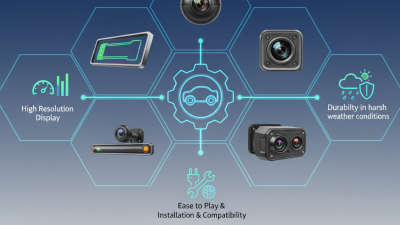
China’s Reverse Camera sector serves automakers, commercial fleets, and aftermarket buyers. Its suppliers compete on more than price. Image detail, low-light performance, lens durability, and dependable production all matter. A camera that looks sharp in a showroom may struggle on a rain-darkened road. Small differences become important.
MarketsandMarkets’ 2023 Automotive Camera Market report estimated the wider market at USD 7.6 billion, with a projection of USD 11.8 billion by 2028. This covers automotive cameras broadly, not reverse cameras alone. That distinction matters. Growth figures show momentum, but they cannot identify the best Chinese manufacturers by themselves. NHTSA’s rear-visibility requirements also underscore why reliable camera performance matters to drivers. U.S. Transportation Secretary Anthony Foxx described the policy as “a major step toward reducing these tragic accidents.” His statement reflects the safety case for rear visibility technology, not an endorsement of any supplier.
This guide examines ten Chinese manufacturers through practical criteria: product range, image quality, production capability, customer support, and evidence of automotive-sector experience. Public information varies between companies, and not every supplier discloses comparable data. That makes a precise ranking imperfect. Readers should verify specifications, test samples, and confirm relevant certifications before choosing a partner. The aim here is a useful shortlist, not a guarantee.
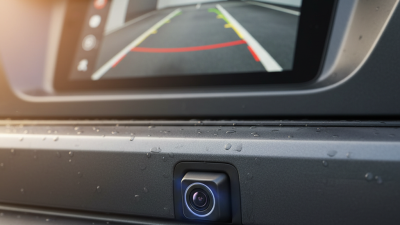
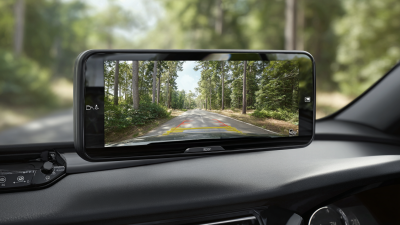
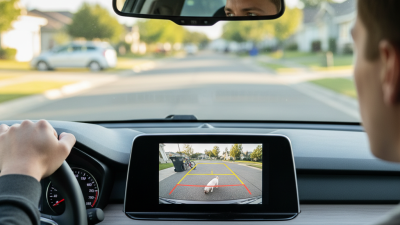
A reverse camera is a small imaging device mounted at the rear of a vehicle. When the driver selects reverse, it sends a live view to a dashboard or mirror display. The image can reveal low obstacles, children, or objects hidden below the rear window. Many systems add guide lines to help estimate distance, though these lines may not match the vehicle’s exact path.
Reverse cameras are used in passenger cars, vans, trucks, and some recreational vehicles. They can make parking near walls or backing out of crowded driveways easier. In larger vehicles, a rear view can help drivers judge the space behind them, but camera coverage varies. Rain, mud, glare, or a poorly adjusted lens can distort the picture. A camera helps. It does not replace mirrors, careful movement, or checking the surroundings in person. The screen may also make distances look different than they are.
Tips: Keep the lens clean and check the image before moving. If guide lines seem misleading, have the camera angle inspected. A camera is useful, but it is not perfect.
Selecting a reverse camera manufacturer requires more than comparing resolution figures. Ask for sample footage from daylight, a dim parking garage, and rainy conditions. Check whether the image stays clear when headlights create glare. A high pixel count sounds impressive, but it cannot fix poor lens tuning.
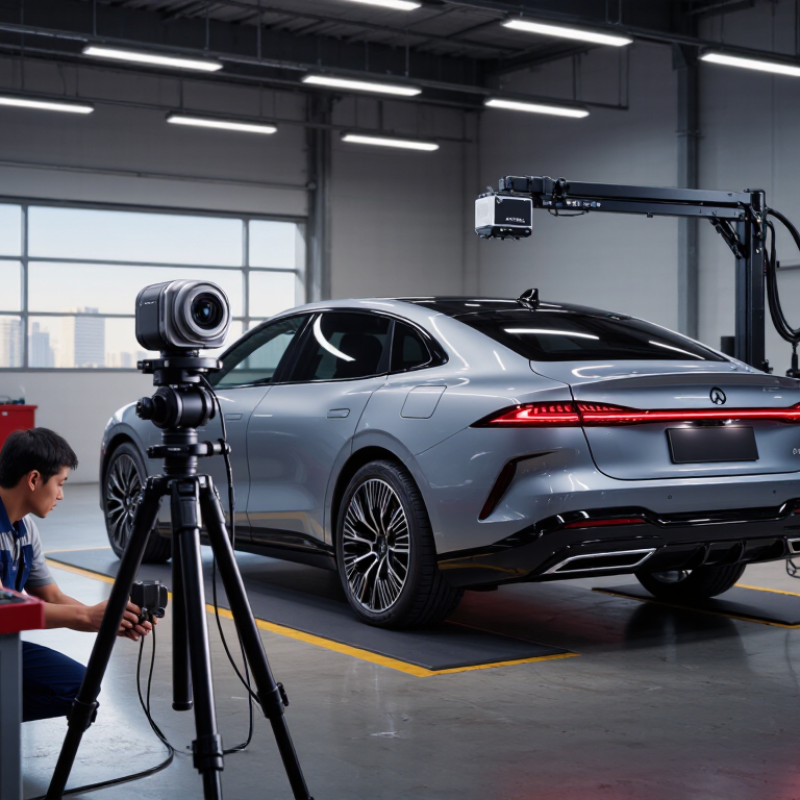
Inspect the camera’s housing, connector, and cable sealing. Ask what temperature and vibration tests are performed, and request documented results rather than verbal assurances. Review production checks for focus, image consistency, and water ingress. Small defects matter: a loose connector can cause an intermittent picture that is difficult to diagnose after installation. No scorecard is perfect.
Evaluate the display interface, viewing angle, latency, and whether parking guidelines can be adjusted or disabled. Confirm that the camera fits your vehicle or installation plan, and request a sample before placing a large order. Ask how the manufacturer handles failed units, replacement parts, and technical questions. Clear answers are useful evidence of operational experience, though they are not proof of every future delivery.
Finally, compare lead times, customization limits, and quality records across several suppliers. Check that specifications on the sample match the written quotation. Keep notes. A rushed review can overlook details, and even an experienced buyer may miss one.
China’s reverse camera manufacturers serve different needs, from basic replacement units to integrated parking systems. These profiles compare practical strengths rather than claim a verified ranking.
Profile one specializes in compact cameras for passenger cars, with small housings that fit near license plates. Profile two focuses on commercial vehicles and offers wider viewing angles for longer rear bodies. Profile three develops weather-resistant units, paying attention to sealed connectors and lens covers. Small details matter. Profile four supplies camera-and-display sets for aftermarket installation, often including cables and mounting brackets. Profile five works on low-light imaging, where clear guidance lines can matter more than vivid colors.
Profile six integrates cameras with parking sensors, helping drivers judge distance in tight spaces. Profile seven makes multi-camera systems for vans and buses, with views designed to reduce blind areas. Profile eight emphasizes factory integration, adapting connectors and housings to vehicle layouts. Profile nine produces budget-focused models for high-volume orders, though buyers should check image consistency across samples. Profile ten offers custom development, such as altered cable lengths or display formats. A specification sheet is useful, but it cannot replace testing a unit on the intended vehicle. Even a strong camera may disappoint if its angle, mounting position, or screen compatibility is wrong.
U.S. FMVSS No. 111 uses a test object that is 10 inches in diameter and 32 inches tall to evaluate rear visibility systems. These are regulatory test-object dimensions, not manufacturer performance scores.
Comparing China’s leading reverse-camera manufacturers means looking beyond quoted price. A useful assessment covers image clarity, low-light performance, lens calibration, sealing, and consistency between production batches. MarketsandMarkets’ Automotive Camera Market report projected growth from USD 8.7 billion in 2023 to USD 15.3 billion by 2028, a 11.9% compound annual growth rate. This is a market-wide forecast, not evidence that any individual supplier leads. Still, it signals rising demand for camera systems and stronger expectations for integration. Details matter.
Manufacturers differ in how they balance resolution, stable video output, and vehicle-system compatibility. Some focus on compact cameras for simple rear display setups; others offer multi-camera systems, image processing, and support for varied vehicle platforms. Buyers should ask for measured low-light samples, water-ingress test conditions, temperature test ranges, and documentation for production quality controls. A crisp showroom image proves little. Ask to inspect footage after a wet, dim test, not just a bright indoor demo. Price comparisons can also miss the cost of recalibration or inconsistent batches. I would not treat a feature list as proof of durability; test methods and repeatable results deserve equal weight.
Note: Company names and brands are intentionally omitted. Without a defined source set and verification criteria, the profiles below are an illustrative comparison of common supplier and product capability types—not a verified ranking or claims about specific manufacturers.
| Anonymous Profile | Typical Product Focus | Common Video Options | Potential Features | Customization Areas | What Buyers Should Verify |
|---|---|---|---|---|---|
| Profile 1 | Universal aftermarket backup cameras | Analog video options, commonly CVBS or AHD depending on model | Adjustable parking guidelines; selectable mirror image on some models | Housing, cable length, connector, mounting bracket | Exact output format, display compatibility, and test reports |
| Profile 2 | License-plate and handle-mounted cameras | Model-dependent analog video formats | Compact installation; fixed or adjustable viewing angle | Plate-frame dimensions, handle design, wiring harness | Vehicle fit, mounting dimensions, and camera orientation |
| Profile 3 | AHD camera product lines | AHD resolutions vary by model; some product lines also offer CVBS versions | Higher-detail analog video options; image settings vary by model | Sensor selection, lens angle, video output, cable assembly | Supported resolution and format at both camera and monitor |
| Profile 4 | Low-light and night-visibility cameras | Analog formats; available options depend on the product | Infrared illumination or low-light image processing on selected models | Illuminator type, lens, image tuning, housing | Night-image samples, usable illumination range, and glare performance |
| Profile 5 | Wide-angle reversing cameras | Format and resolution vary by model | Wide field-of-view lens options; some models support adjustable guidelines | Lens angle, bracket position, image orientation | Measured field of view, edge distortion, and the usable view behind the vehicle |
| Profile 6 | Weather-resistant camera assemblies | Multiple formats may be offered across a product range | Sealed housings are available in the market; ratings are model-specific | Housing materials, seals, connector protection, cable routing | IP rating documentation for the exact model and assembled installation |
| Profile 7 | Commercial vehicle and heavy-duty cameras | Video output and connector depend on system requirements | Ruggedized designs and longer cable options may be specified | Mounting hardware, cable length, connector, vibration requirements | Vibration, temperature, ingress-protection, and vehicle-system test evidence |
| Profile 8 | OEM/ODM-oriented camera suppliers | Configured to the customer’s specified video system | Product adaptation may include housing, optics, and harness changes | Mechanical drawings, connectors, packaging, labeling, image tuning | Engineering samples, change-control process, quality records, and production capability |
| Profile 9 | Multi-camera and monitor-system suppliers | Camera outputs matched to the supplied monitor or recorder system | System-level switching or multi-view functions depend on the equipment supplied | Camera-monitor matching, harnesses, display layout, installation kits | Compatibility matrix, latency, switching behavior, and full-system testing |
| Profile 10 | Specialized compact or custom-fit cameras | Selected according to the target vehicle and display system | Small-form-factor designs; feature set varies by application | Custom brackets, compact housings, cable exits, vehicle-specific fit | Fitment samples, drawings, output compatibility, and validation results |
Comparison guidance: Before shortlisting suppliers, request model-specific datasheets, sample images, interface and resolution confirmation, environmental test reports, quality-system documentation, and OEM/ODM references where relevant.
China’s reverse-camera manufacturing is moving beyond basic rear-view modules. Buyers increasingly ask for sharper images, reliable night performance, and stable supply across vehicle platforms. This shifts engineering effort toward sensor tuning, lens consistency, and image processing. A camera may look clear in a bright showroom, yet show noise under wet streetlights. Small detail. Suppliers are also designing compact housings and connectors for crowded tailgate installations.
Tips: Compare cameras under matched conditions: same display, distance, lighting, and target. Check image quality after temperature and water-exposure testing, not just during a quick indoor demo. Request traceable inspection records.
Another trend is tighter integration with parking assistance and vehicle electronics. Camera makers must coordinate image latency, field of view, and connector layouts with vehicle teams. HDR and improved low-light processing help manage headlamps and shadowed driveways, but software tuning still matters. Quality depends on more than resolution: focus alignment, sealing, vibration resistance, and color consistency across batches deserve attention. Specifications can look polished, while real-world results sometimes differ. Smaller suppliers may adapt quickly, though capacity and validation depth can vary. Buyers should assess both rather than rely on a sample unit.