How to Choose the Best 7 Inch Waterproof Monitor for Your Needs?
When selecting a 7 Inch Waterproof Monitor, it's essential to consider various factors that affect its performance and suitability for your needs. According to a recent report by Market Research Future, the global waterproof monitor market is expected to grow at a compound annual growth rate (CAGR) of 7.5% through 2025. This growth highlights the increasing demand for reliable, waterproof displays across various sectors, including marine, industrial, and outdoor activities.
Expert in display technology, Dr. Jane Thompson, emphasizes the importance of quality in selection: "Choosing the right waterproof monitor can significantly impact your operational efficiency." This statement underlines the need for thoughtful consideration when making a purchase. A 7 Inch Waterproof Monitor should not only be durable but also deliver excellent image quality under challenging conditions.
Buyers often overlook critical features such as brightness, contrast ratio, and connectivity options. Investing in a monitor that meets your specific needs can seem daunting. However, understanding the core functionalities and reviews from trusted sources can simplify this process. Industry professionals encourage potential buyers to reflect on their unique requirements before making a decision. The right choice can enhance user experience, while a poor selection may lead to frustration.
Factors to Consider When Choosing a 7 Inch Waterproof Monitor
When selecting a 7-inch waterproof monitor, several factors must be considered. First, evaluate the display resolution. A higher resolution, such as 1920x1080, offers clearer images and enhanced detail. Studies show that users often prefer monitors with at least 1080p resolution for outdoor applications, where visibility is crucial.
Next, look at the brightness rating. For outdoor use, monitors with a brightness of 800 nits or higher are recommended. These ensure visibility in bright sunlight. Additionally, examine the waterproof rating. An IP68 rating guarantees that the monitor can withstand immersion in water, ensuring longevity and reliability in various environments.
Port compatibility should also be assessed. Check for HDMI and USB connections, which enhance versatility. A report by industry leaders indicates that more professionals favor monitors that support multiple formats. Lastly, consider weight and portability. A heavier monitor may limit usability in mobile settings. Focus on finding a balance between weight and robustness to meet your specific requirements.
How to Choose the Best 7 Inch Waterproof Monitor for Your Needs?
| Feature |
Description |
Importance Level |
Notes |
| Waterproof Rating |
Look for a rating of IP65 or higher for reliable waterproofing. |
High |
Essential for outdoor use or wet environments. |
| Display Resolution |
Choose at least 800x480 resolution for clear visuals. |
Medium |
Higher resolution provides better detail. |
| Brightness Level |
Minimum of 400 nits recommended for outdoor visibility. |
High |
Affects usability in bright conditions. |
| Viewing Angle |
Wide viewing angles (≥ 170°) improve usability. |
Medium |
Important for multi-viewer scenarios. |
| Input Options |
Multiple input types (HDMI, AV, VGA) for versatility. |
High |
Increases compatibility with various devices. |
| Battery Life |
Look for long battery life if not using mains power. |
Medium |
Vital for portable applications. |
| Mounting Options |
Consider models with VESA mounts for easy installation. |
Low |
Convenience in various setups. |
Understanding Different Display Technologies for Waterproof Monitors
When selecting a 7-inch waterproof monitor, understanding display technologies is crucial.
LCD and LED are the two main types available.
LCD monitors typically have good color reproduction and are lightweight. However, they may struggle in direct sunlight.
LED monitors offer brighter displays, improving visibility outdoors.
This feature is vital for outdoor settings, such as marine applications or construction sites.
Tips: Consider your environment when choosing. If you work outdoors, an LED monitor might be more beneficial.
Think about your use case. Will you need vibrant colors for video? An LCD might not meet this need.
Additionally, some monitors use OLED technology. These displays provide deeper blacks and higher contrast.
However, they may be less durable against water. So, weigh these factors based on your priorities.
It's essential to balance performance with reliability. Remember, each type has trade-offs. Choose wisely for your specific needs.
Evaluating Waterproof Ratings: IP65, IP67, and Beyond
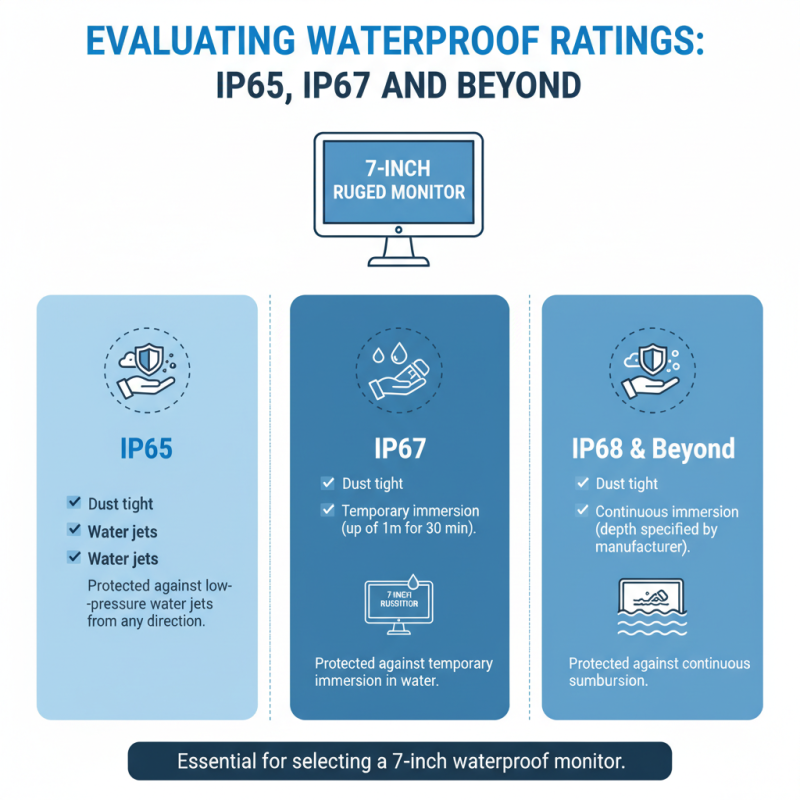
When selecting a 7 inch waterproof monitor, understanding waterproof ratings is essential. Common ratings include IP65 and IP67. These ratings indicate the monitor's ability to withstand dust and water.
IP65 means the monitor is dust-tight and can resist water jets from any direction. It’s suitable for environments with light rain or splashes. IP67 offers more protection, indicating the device can endure immersion in water up to one meter for a limited time. This makes it ideal for harsher conditions, like outdoor settings or near pools.
Tips for your selection: Always check the specific environment where the monitor will be used. If high humidity is present, IP67 might be necessary. Consider how often the monitor will be exposed to liquids. Frequent exposure? Opt for the higher rating. Also, reflect on potential accidents. A lower rating can leave your monitor vulnerable in unpredictable scenarios. Choose wisely and ensure your investment lasts.
Comparison of Features: Touchscreen, Connectivity, and Resolution
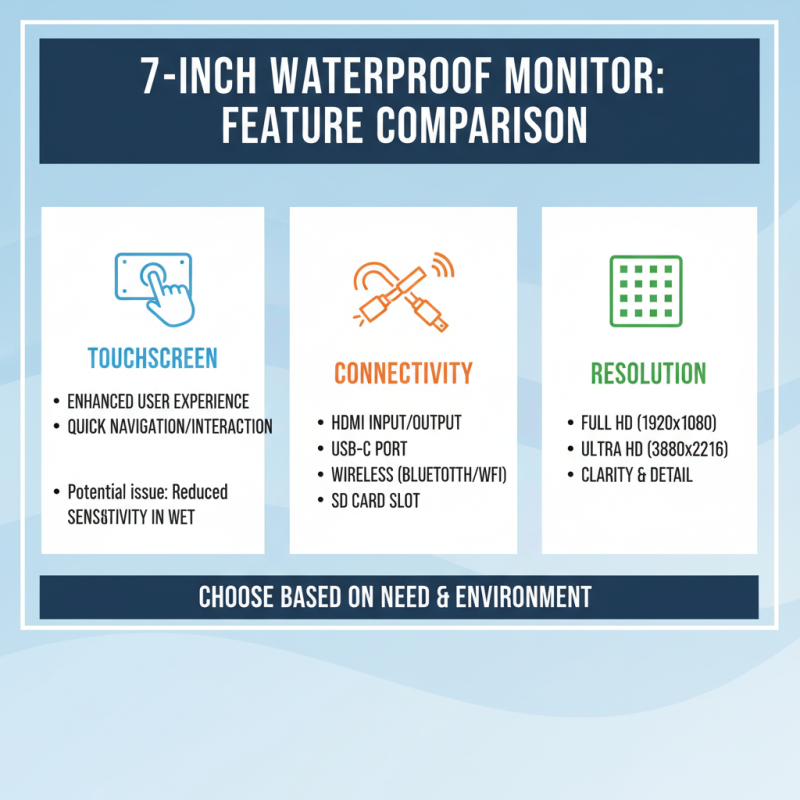
When selecting a 7-inch waterproof monitor, key features like touchscreen capabilities, connectivity options, and resolution are integral. Touchscreens can enhance user experience. They allow for quick navigation and interaction. A responsive touchscreen can make operating the monitor intuitive. However, sometimes touch sensitivity may falter, especially in wet conditions.
Connectivity options are crucial as well. Look for monitors with multiple input choices. HDMI, VGA, and USB connections offer versatility. Wireless connectivity can be beneficial too. Yet, some monitors may not support certain formats, leading to frustration. Always check compatibility with your devices.
Resolution plays a significant role in image clarity. A higher resolution provides sharper images. Aim for at least 800x480 pixels for decent quality. However, some budget monitors may compromise on resolution. This can affect visibility in bright outdoor settings. Pay attention to these details to ensure the monitor meets your specific needs.
Budgeting for Your 7 Inch Waterproof Monitor Purchase and Maintenance
When budgeting for a 7-inch waterproof monitor, consider both purchase and maintenance costs. A quality monitor may have a higher upfront price, but durability can save money over time. Look for models that are easy to maintain. Regular cleaning and occasional servicing can enhance lifespan.
Tips: Don’t underestimate hidden costs. Accessories like mounts and cables can add up. Allocate a portion of your budget for replacement parts. Monitor batteries may require replacement every few years. Factor this into your budget to avoid surprises.
Choose a monitor based on your specific use case. If it’s for outdoor activities, prioritize rugged designs. For marine use, ensure features like brightness and visibility under sunlight. Reflect on your environment to make an informed choice. Consider how often you’ll use the monitor to justify your investment. A thoughtful purchase can bring long-term value.
Budget Comparison for 7 Inch Waterproof Monitors